
Tyleen Mc Donald – Innovación y Cultura
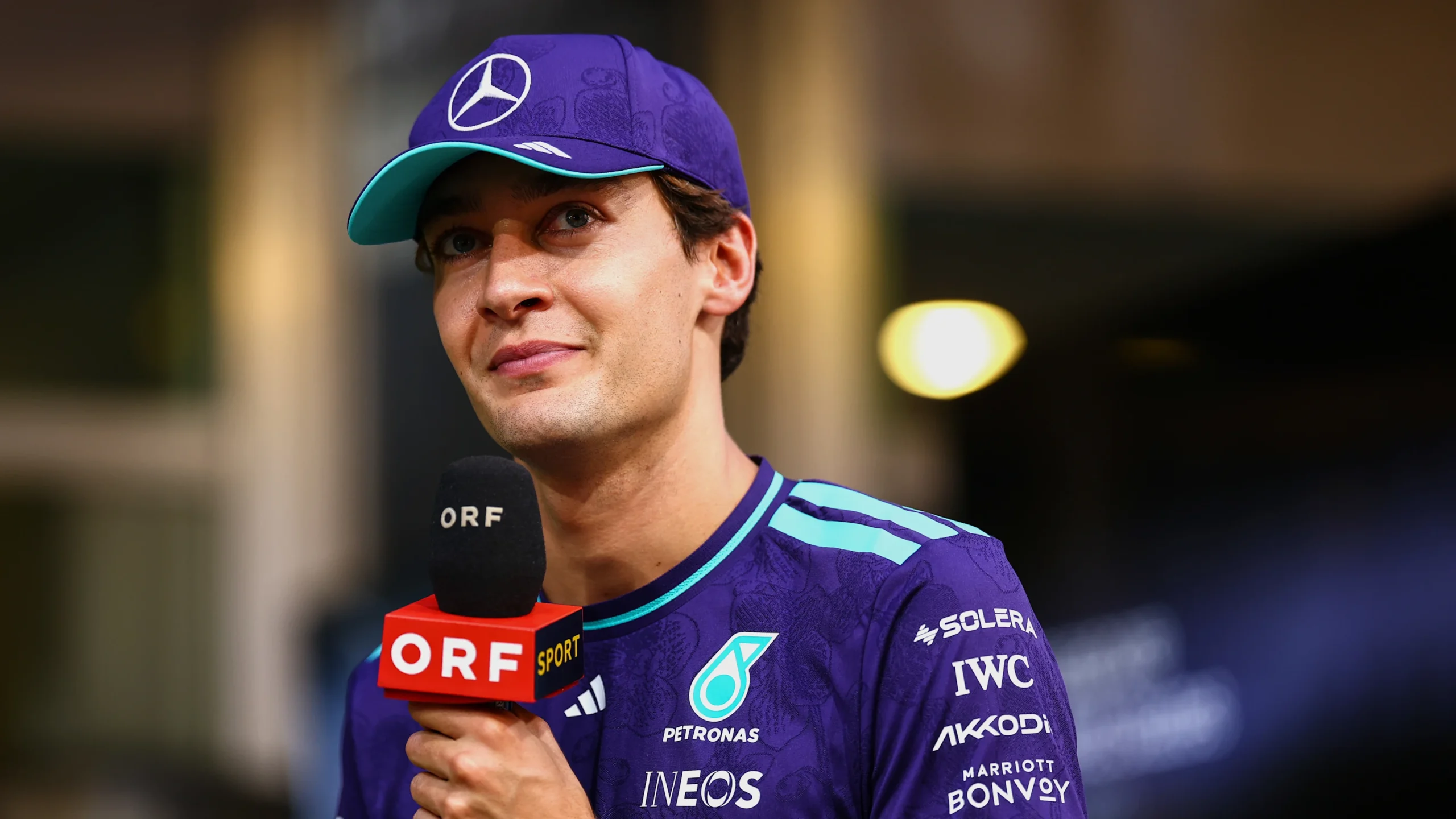
A power-unit penalty will send the Mercedes driver to the back of the grid at Marina Bay, while a split in car specifications gives the team another opportunity to understand its latest aerodynamic developments. His weekend illustrates why Formula 1 performance depends on far more than horsepower.
In Formula 1, a race can be shaped long before the lights go out. A component failure can compromise a driver’s starting position, an aerodynamic update can change the balance of a car, and a decision about tyres or energy deployment can determine whether its performance lasts until the chequered flag.
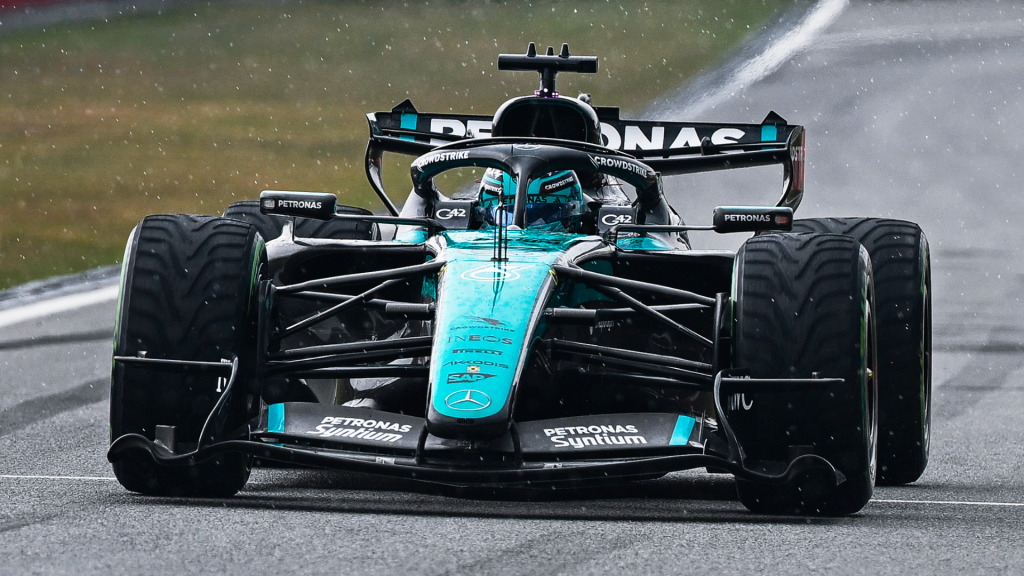
George Russell arrives at the 2026 Singapore Grand Prix facing several of those challenges at once. After a power-unit failure forced him to retire from the lead-up race at Sepang, Mercedes has had to introduce additional components beyond his permitted seasonal allocation. The resulting 40-place grid penalty means he will start Sunday’s Grand Prix from the back of the field. The penalty does not apply to Saturday’s Sprint. <Cite refs={[«turn633015news6″,»turn633015search2»]}/>
The setback comes at a particularly interesting moment for Mercedes. The team is also trying to understand the performance of its latest aerodynamic package, introduced at Sepang. For Singapore, Russell will return to the previous specification of the W17, while team-mate Kimi Antonelli continues with the updated version. The comparison gives Mercedes an opportunity to gather evidence about how the two configurations perform under the different demands of Marina Bay. <Cite refs={[«turn633015search21″,»turn633015search29»]}/>
Russell’s weekend therefore offers a useful insight into a fundamental truth of modern Formula 1: speed is not produced by a single component. It emerges from the interaction between power, aerodynamic efficiency, mechanical grip, tyre behaviour, energy management and the decisions made by the team.
1. Power-unit reliability: performance begins with finishing
The power unit is the most obvious place to start. Modern Formula 1 cars combine a 1.6-litre turbocharged V6 internal-combustion engine with electrical systems that recover, store and deploy energy. Under the 2026 regulations, the electrical contribution has a substantially greater role in overall performance than it did under the previous generation of power units.
That makes the relationship between mechanical reliability and competitive performance especially important. A failure does not simply cost a driver the points available in one race. It can force the team to introduce replacement components, consume its seasonal allocation and accept grid penalties at a later event.
That is the position Russell faces in Singapore. Mercedes must replace components following the Sepang failure, and exceeding the permitted allocation triggers sporting penalties. The scale of the sanction reflects the number and type of components introduced beyond the limits, rather than a discretionary decision to punish the driver.
The distinction matters because the penalty is not evidence that Russell has suddenly lost performance. It is the sporting consequence of a technical problem, and it changes the conditions under which he must compete.
Reliability is therefore part of performance, not a separate engineering concern. A car capable of fighting at the front has little value if it cannot complete the race, while repeated component changes can undermine a driver’s results even when the underlying pace remains competitive.
2. Aerodynamics: why Mercedes is comparing two cars
Power is only one part of the equation. The air moving around a Formula 1 car determines how much downforce it produces, how much drag it creates and how effectively it can change direction through a corner.
Downforce presses the car towards the track, increasing the grip available to the tyres. More downforce can improve cornering performance, but aerodynamic load also brings trade-offs. Depending on the design, the resulting drag can reduce straight-line speed, while an imbalance between the front and rear of the car can affect stability and driver confidence.
The challenge is finding the right balance for each circuit. Singapore’s Marina Bay layout places a premium on braking, traction, precision and performance through a succession of corners. The car must generate sufficient grip and remain predictable, particularly as the driver works close to the barriers.
Mercedes’ decision to run different aerodynamic specifications is consequently significant. Russell will use the older package while Antonelli continues with the latest update. The comparison can help engineers evaluate the changes under the same event conditions, although differences in driver feedback, setup and track conditions must also be considered before drawing firm conclusions.
The distinction is important: reverting to an older aerodynamic package is not the same as replacing a power unit. Russell’s grid penalty stems from the latter, while the change in car specification is a separate engineering decision intended to help Mercedes understand its performance.
The stopwatch will ultimately matter more than the appearance or complexity of an upgrade. A component may produce the expected aerodynamic effect in isolation without delivering the anticipated lap-time gain once it interacts with the rest of the car.
3. Tyres: where grip becomes a strategic resource
Even with a competitive power unit and an effective aerodynamic package, a Formula 1 car cannot perform without its tyres operating in the right conditions.
Tyres have a working temperature range in which they can deliver their intended level of grip. If they are too cold, the driver may struggle to generate traction and confidence. If they overheat, performance can deteriorate, making the car slower and potentially increasing wear.
The challenge is not simply to make the tyres as hot as possible. It is to keep them in a useful operating window while managing the demands of acceleration, braking and cornering.
Singapore adds another variable: heat. The physical demands of the circuit and the conditions around the Marina Bay street track make thermal management important for both the driver and the car. Traffic can also complicate a recovery drive. Following another car closely can compromise airflow and increase the difficulty of managing temperatures, while passing opportunities may require a driver to push harder and expose the tyres to additional stress.
For Russell, starting at the back changes the context in which these decisions will be made. He may need to pass slower cars, manage tyre life and choose when to attack, but a recovery cannot be built on aggression alone. A driver who uses too much of the available grip early in a stint may leave himself with fewer options later.
4. Energy deployment: using power at the right moment
The 2026 power units make energy management another central part of the performance equation. Electrical energy can be recovered under braking and deployed to supplement the output of the internal-combustion engine, subject to the technical and sporting regulations.
The strategic question is not simply how much power the car can produce. It is how effectively the available energy can be used around the lap.
Deployment decisions can influence acceleration out of corners, defence on a straight and the ability to attempt an overtake. Recovery opportunities, meanwhile, depend on the circuit, braking demands and the way the driver approaches each section of the lap.
This creates a continuous exchange between the driver, the car’s control systems and the team’s wider strategy. Energy used to attack in one section may affect what is available later, so the timing of deployment matters alongside the total amount.
For a driver starting at the back, those choices become particularly important. Passing another car may require a carefully prepared move, with sufficient acceleration and positioning to complete it without compromising the next corner. Spending energy too early or attempting a move without a clear advantage can cost time rather than gain it.
Energy management is therefore not a substitute for overtaking skill. It is one of the tools that allows a driver to create an opportunity and make it count.
5. Strategy: turning technical performance into a result
A race strategy must account for variables that change as the event unfolds: tyre degradation, traffic, pit-stop timing, safety cars and the relative pace of competitors. The fastest theoretical strategy is not always the best practical choice because its success depends on what happens around the car.
Starting from the back changes the options available to Russell and Mercedes. The team must consider how quickly he can make progress, where he is likely to encounter traffic and whether an alternative tyre or pit-stop approach could help him gain positions.
Singapore’s street circuit makes the challenge more complex. Its barriers and relatively limited passing opportunities can make it difficult to recover positions through raw pace alone. A driver may be faster than the car ahead and still need to wait for a suitable opportunity to pass.
The team must also weigh the risk of losing time by staying out against the benefits of a pit stop. An early stop can provide a tyre advantage, but it may also leave the driver vulnerable later in the race. Waiting can offer flexibility, although traffic or a safety car may change the calculation.
None of these decisions can be made in isolation. Strategy depends on the car’s pace, tyre behaviour, energy availability and the positions of its rivals. It is the process of combining those variables into a coherent plan, then adapting when the race refuses to follow it.
6. What Russell’s weekend tells us about Formula 1
Russell’s challenge in Singapore brings several layers of Formula 1 into focus. The power-unit failure explains the penalty, but it does not explain the full competitive picture. Mercedes must also evaluate its aerodynamic development, while Russell has to manage the tyres, energy deployment and traffic involved in recovering from the back of the field.
The weekend also illustrates the difference between diagnosing a problem and finding a solution. Running two car specifications provides a comparison, but the engineers must still interpret the data and determine which changes deliver a repeatable performance benefit. A single result cannot always separate the effect of an upgrade from circuit characteristics, setup choices or changing conditions.
For the driver, the task is more immediate. He must extract the maximum from the package available, make sound decisions in traffic and avoid turning a difficult starting position into an even more costly race. The speed of the car matters, but so does the team’s ability to respond to the circumstances.
That is what makes Formula 1 engineering so compelling. Aerodynamics, tyres, power and strategy are often discussed as separate subjects, yet their value is determined by how they work together. A gain in one area can be offset by a weakness in another, and the most sophisticated solution is not necessarily the one that produces the best result.
Russell’s Singapore weekend is a reminder that performance is a system. The challenge for Mercedes is to understand its car well enough to extract more from it; the challenge for Russell is to turn the tools available into positions on track. In Formula 1, technology creates the potential for speed. Reliability, execution and strategy determine how much of that potential reaches the chequered flag.
0 comentarios